The EquiMap 200 System
See where a horse hurts, before it becomes a limp.
Objective, real-time electrodermal pain and injury mapping for horses. A handheld sensor and tablet software turn invisible discomfort into a color-coded map that veterinarians can act on.
The problem
Horses can't tell you where it hurts, and by the time it shows, it's often too late.
- Discomfort and injury in horses have always been diagnosed by pushing, prodding, and watching for a reaction: a slow process of elimination.
- Horses are stoic by nature, so pain is easy to miss. Pinpointing the true source can take weeks and cost thousands of dollars in additional testing.
- Subtle lameness is invisible until it becomes a limp, and by then damage may already be done.
The solution
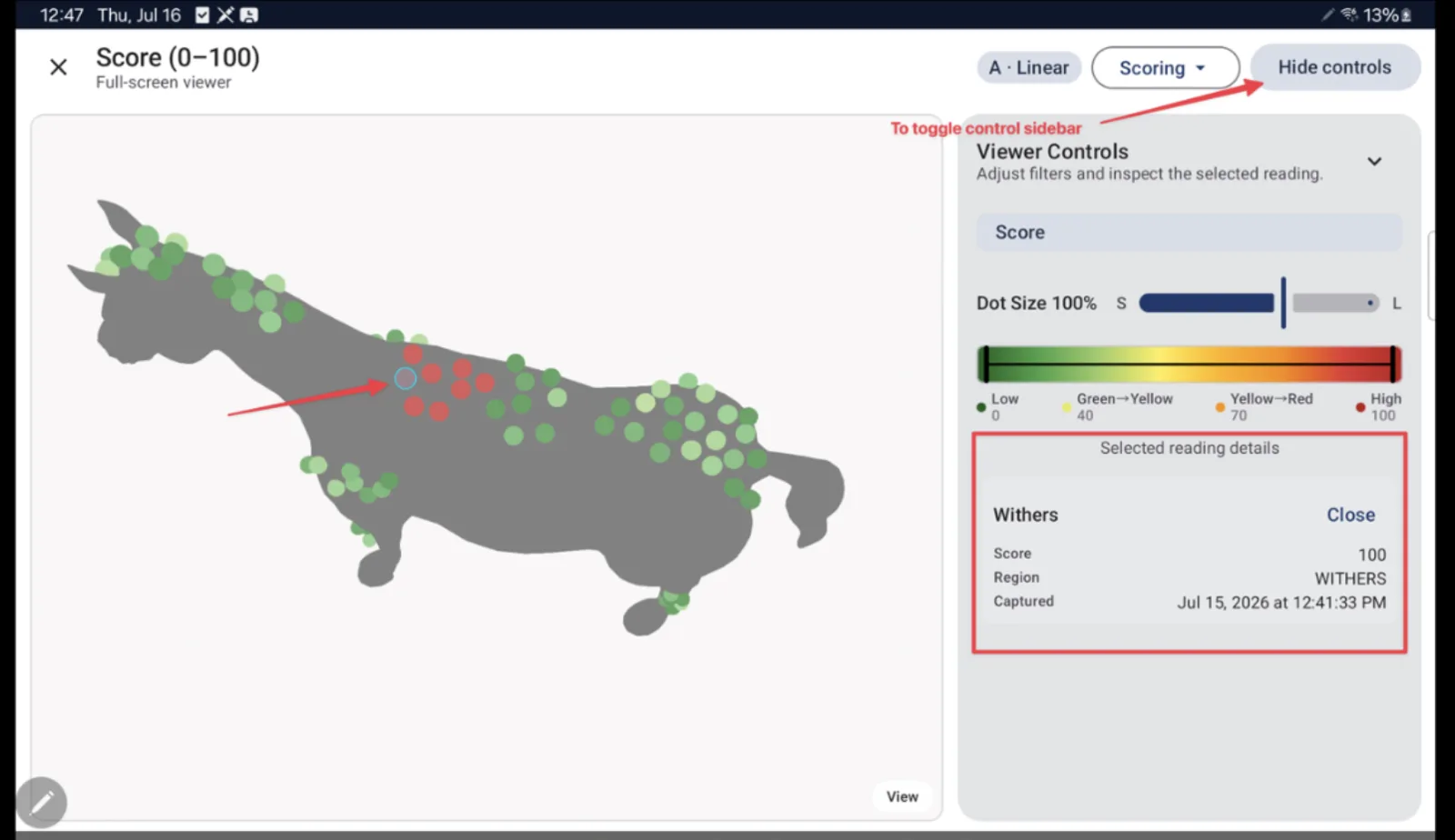
The EquiMap 200 turns invisible pain into a color-coded map.
Veterinarians can quickly identify areas of concern, monitor recovery, and adjust treatment, all with minimal stress to the animal. The result is faster diagnosis, lower treatment costs, and more humane care.
- 01
Baseline
A trained technician records a whole-body electrodermal baseline in under 15 minutes. No pain, no sedation.
- 02
Scan
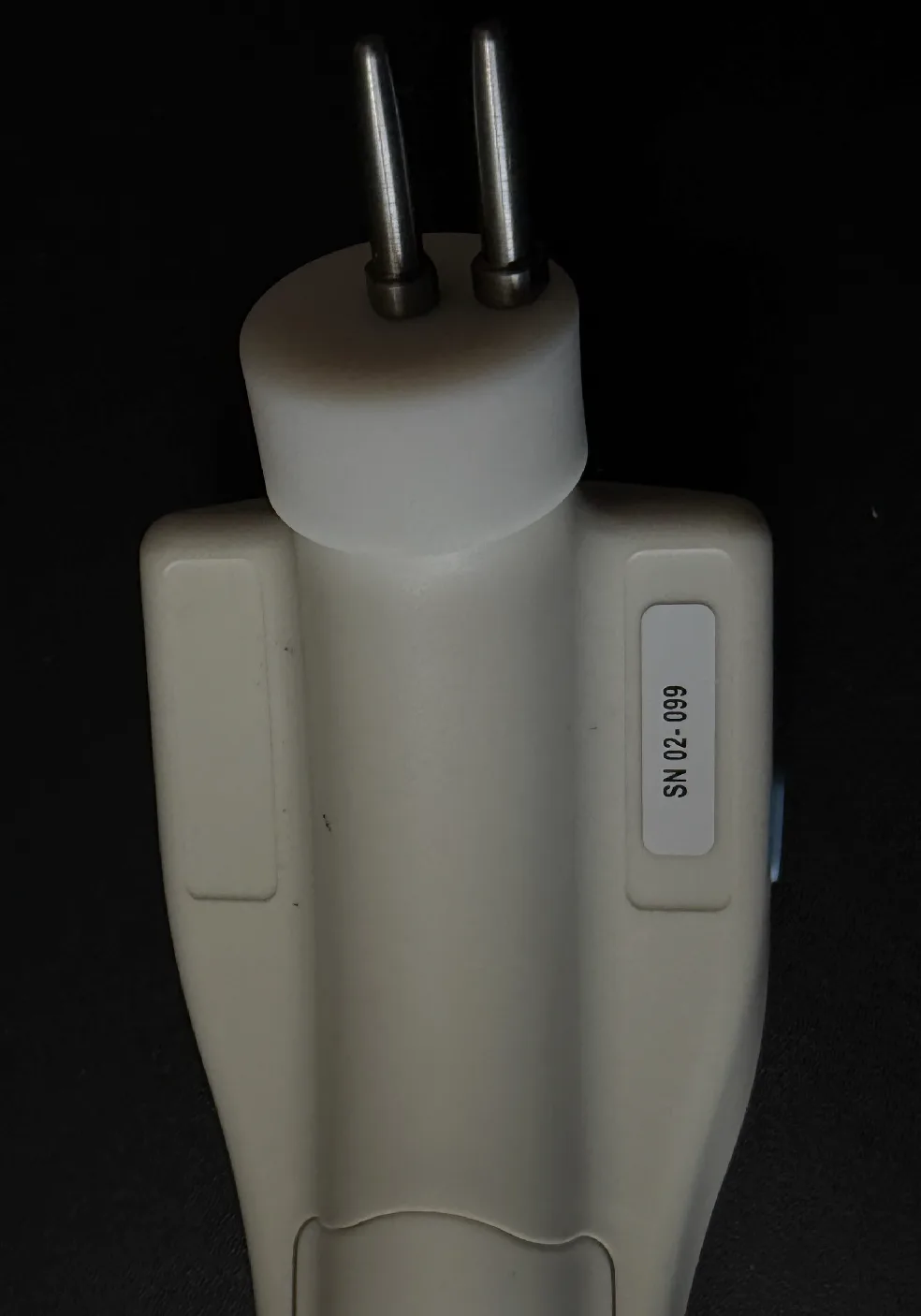
The Epi-Scan sensor touches the skin over the area of concern and streams readings over Bluetooth.
- 03
Visualize
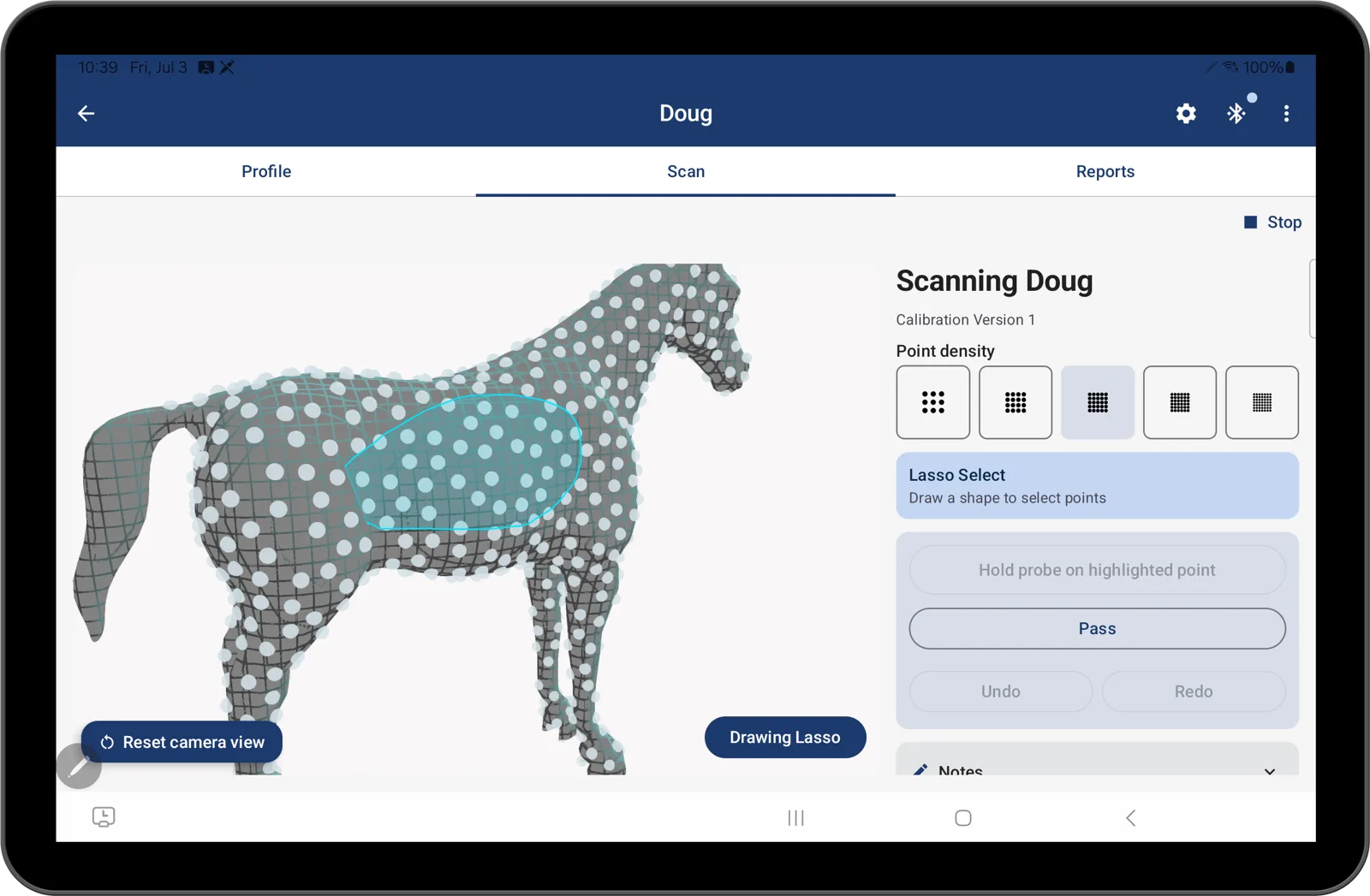
Software overlays color-coded results on a movable horse image, flagging areas of elevated electrical activity.
- 04
Track
Repeat scans build a defensible, time-stamped record for the vet, owner, trainer, and insurer.
"The 200 is not the final solution for diagnosing injuries, but it is by far the best tool to accurately assess them."Dr. Christopher Dougherty, Surgeon
Product and technology
A two-part system, backed by regulatory listing and issued patent claims.
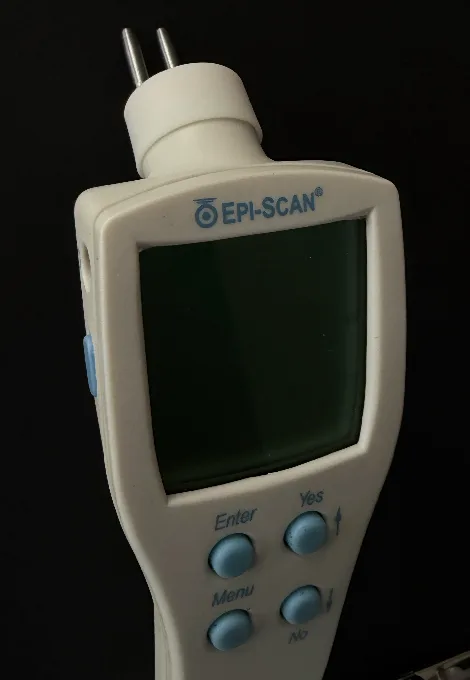
Handheld Epi-Scan sensor
Measures cutaneous electrodermal activity in seconds. Class II non-invasive, adapted from a human-medicine platform for equine physiology.
Companion tablet software
A non-cloud app that manages a database of horses, scans, reports, and photos, and guides the technician through standardized scanning. Readings are combined with AI-assisted analysis.
Intellectual property
- Issued method patent with 21 broad claims on touch-based EDA detection
- Continuation patent pending on new sensor designs and applications
- FDA 510(k)-listed sensor, classified Class II non-invasive
- Gen 2 software: lasso selection, full-spectrum color, six density options
Roadmap: AI-assisted scoring that improves with use, and AR-guided scan-point confirmation.
Competitive landscape
EquiMap fills the open gap: triage and long-term monitoring.
Whole-body pain map, per-horse baseline, and longitudinal monitoring: upstream of gait analysis, downstream of imaging.
| Category | Examples | Does well | Can't do |
|---|---|---|---|
| Objective gait measurement | Equinosis Q, Sleip, EquiMoves, ETB Pegasus | Quantify limb asymmetry during a trot-up | Localize pain, read physiology, run between vet visits |
| Imaging | X-ray, ultrasound, MRI, scintigraphy | Show the structural lesion once a region is found | Screen, triage, or monitor recovery without repeat visits |
| Therapy and bodywork | Cryotherapy, shockwave, PEMF, chiropractic | Deliver treatment horses already pay for | Diagnose, localize, or document outcomes |
| Subjective exam | AAEP 0–5 grading, flexion tests | Universal, free, accepted by every buyer and insurer | Reliably catch subtle lameness or produce an insurer-ready record |
Traction and validation
Five years of human trials, live equine pilots, and a field program ahead.
- Complete
Phase One: human trials
Five years of human clinical trials informed the method patent and system software, now fully redirected to equine applications.
- 2023–2024
Equine pilot studies
Prelaunch testing with Dr. Kent, DVM, PhD, on live horses (Sonny and Lil Bit) validated sensitivity to injury, arthritis, and exercise-induced change.
- Upcoming
Phase Two: field trial
A three-month program with world-renowned lameness veterinarians and two university programs for independent, third-party validation.
| Pre-exercise | Post trot 1 | Post trot 2 | |
|---|---|---|---|
| Mean | 62.2 | 100.3 | 89.6 |
| Median | 20.0 | 35.0 | 65.0 |
Market opportunity
A large, underserved buyer base across the equine economy.
Who it serves
- Veterinarians and vet hospitals
- Thoroughbred stables and trainers
- Race tracks
- Animal auction houses
- Transportation services
- Insurers
- Competition event qualification
International expansion
Brazil · Saudi Arabia · Dubai · England
A reseller and licensing model, supported by a third-party logistics partner outside the U.S.
Contact
Bring objective pain mapping to your barn, clinic, or track.
Veterinarians, trainers, insurers, and investors: we'd like to hear from you. Qualified investors can request the investor presentation.